
Win More Points with Clear Structure & Strong Evidence

Most SMEs lose tender points because their bids lack clear structure and solid evidence. You might be spending hours crafting responses that don’t hit the mark with evaluators. In this post, you’ll learn how to organise your answers around the bid scoring matrix and present proof that wins points. Ready to lift your quality scores? Let’s get started.
Improve Tender Scores with Structure
To improve your tender scores, it’s crucial to align your responses with the evaluation criteria. A structured bid not only makes your case stronger but also ensures you’re addressing what evaluators are looking for.
Mapping Responses to Evaluation Criteria
Start by understanding the evaluation criteria. This is your roadmap. It tells you what the evaluators are scoring and their priorities. Break down each criterion and map your response directly to it. This approach keeps your bid focused and relevant. When you align your answers with these criteria, you increase your chances of scoring higher.
Crafting a Clear Bid Structure
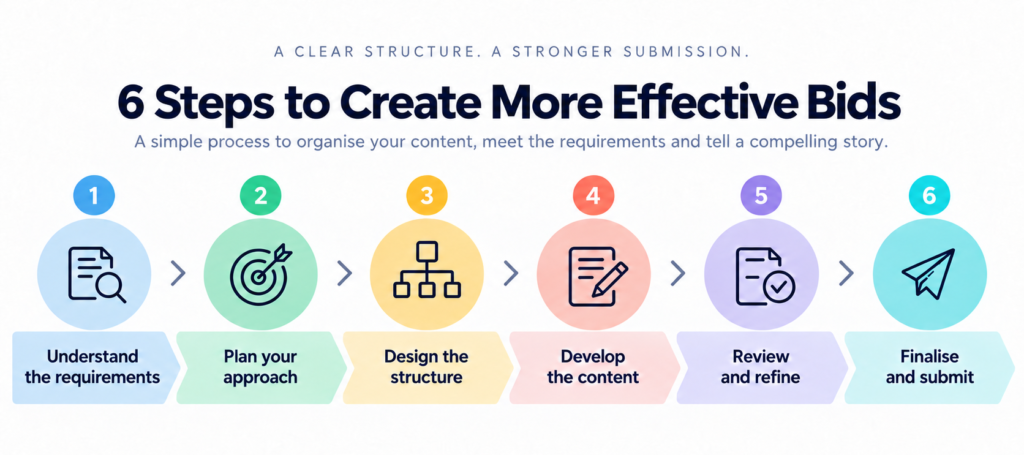
A clear bid structure is your best friend. It helps evaluators follow your logic and see the value you bring. Begin with an introduction that outlines your main points. Use headings and subheadings to guide the reader through each section. This clarity not only helps evaluators but also ensures you cover all necessary points. Remember, a well-structured bid reflects a well-structured organisation.
Importance of Compliant Bid Responses
Compliance is critical. Non-compliant bids are often disqualified immediately, wasting your time and effort. Ensure every section of your bid meets the requirements. This means answering every question and providing all requested documents. Compliance demonstrates professionalism and respect for the process. It assures evaluators that you can follow rules and deliver on promises.
Evidence-Based Tendering Techniques
Providing solid evidence in your bids can significantly enhance your scores. Let’s explore how to do this effectively.
Valued Evidence in UK Public Sector Tenders
In UK public sector tenders, evaluators look for evidence that proves your capability. This evidence can be in the form of past project successes, customer testimonials, or certifications. Providing this proof builds trust and credibility. Always choose evidence that directly relates to the criteria and your claims.
Using Case Study Evidence Effectively
Case studies are a powerful tool. They show how you’ve successfully handled similar projects in the past. Start with a brief overview of the project, then detail the challenges, your solutions, and the outcomes. Highlight specific numbers or achievements. This narrative proves you can deliver results and reassures evaluators of your expertise.
Incorporating KPIs and SLAs for Impact
Key Performance Indicators (KPIs) and Service Level Agreements (SLAs) can make your bid stand out. They set clear expectations and show you’re committed to delivering quality. Include specific KPIs and SLAs that align with the tender requirements. This demonstrates your understanding of the project and your ability to meet its demands.
Boosting Quality Submission with Support

Improving your bid submission quality can be challenging, but support is available to make it easier.
SME Tender Support and Bid Readiness
As an SME, having access to tender support can be a game-changer. Bid readiness assessments help you understand your strengths and areas for improvement. This service tailors guidance to your needs, ensuring you’re fully prepared to submit a strong bid. Knowing you’re ready boosts confidence and increases your chances of success.
Online Bid Mentoring Benefits
Online bid mentoring offers flexibility and expert advice tailored to your needs. These sessions are designed to fit around your schedule, providing the support you need when you need it. Whether you’re new to tendering or looking to improve, mentoring can guide you through the process, offering insights and strategies to enhance your submissions.
Booking Your 1-2-1 Session with Stuart Reed
If you’re serious about improving your tender outcomes, consider booking a 1-2-1 session with Stuart Reed. This session will provide personalised guidance, helping you identify weaknesses and build on strengths. Gain insights from an expert with over 25 years of experience in public sector tendering. The sooner you get started, the sooner you can see results.
Frequently Asked Questions
What is a bid scoring matrix?
A bid scoring matrix is a tool used by evaluators to assess and score tender submissions. It lists criteria and their weightings, ensuring a fair and structured evaluation process.
How can SMEs improve tender scores?
SMEs can improve scores by aligning their responses with evaluation criteria, providing evidence-based submissions, and ensuring full compliance with tender requirements. Support from tender experts can also enhance bid quality.
Why are case studies important in tenders?
Case studies provide concrete examples of past successes, showcasing your ability to handle similar projects. They build trust and demonstrate your expertise and reliability.
What role do KPIs and SLAs play in tenders?
KPIs and SLAs clarify performance expectations and commitments. Including them in your tender shows you understand the project’s demands and are prepared to meet or exceed them.
Is online bid mentoring effective?
Yes, online bid mentoring offers tailored support and expert insights, helping businesses improve their bid strategies and submissions. It’s flexible and can be adapted to your specific needs.