Why Evidence-Led Tendering is Winning in 2026

If you spend any time on LinkedIn’s public procurement forums, bid-writing groups, or procurement thought leadership feeds, a clear theme is emerging: public sector buyers are no longer looking for promises in tender responses. They are looking for proof.
The implementation of the Procurement Act 2023, combined with increasing scrutiny around social value, sustainability, mobilisation capability, and contract delivery, is changing how bids are evaluated across local government, NHS, housing, justice, and wider public sector frameworks. Recent procurement discussions highlight a consistent message: successful suppliers are moving beyond compliance and focusing on demonstrable outcomes.
For many suppliers, particularly SMEs, this represents both a challenge and an opportunity.
From MEAT to MAT – A Fundamental Shift
One of the most significant changes brought about by the Procurement Act is the movement from the concept of the “Most Economically Advantageous Tender” (MEAT) to the “Most Advantageous Tender” (MAT). This subtle change in terminology reflects a much wider shift in procurement philosophy. Buyers are increasingly empowered to consider broader value outcomes rather than focusing heavily on cost and quality alone.
In practical terms, this means procurement teams are asking:
- How will the contract deliver measurable social value?
- What is the supplier’s approach to sustainability?
- Can the bidder demonstrate mobilisation capability?
- How will performance be monitored and reported?
- What risks have been identified and how will they be mitigated?
These are the questions that are increasingly determining who wins and who loses.
Social Value Has Moved from Commitment to Accountability
A recurring discussion within procurement circles is the evolution of social value from a bid-stage narrative to a contract delivery requirement.
Historically, many suppliers treated social value responses as standalone tender questions, often filled with aspirational commitments. Today, buyers are looking for evidence that commitments will be delivered, measured, and reported throughout the contract lifecycle. This trend has been highlighted by procurement professionals and social value specialists alike, who note that the focus is now on outcomes rather than intentions.
The strongest bids now include:
- Clearly defined social value activities.
- Quantifiable targets.
- Named delivery responsibilities.
- Monitoring mechanisms.
- Regular reporting schedules.
Simply stating that your organisation supports communities is no longer enough. Buyers want to know exactly how, when, and how success will be measured.
Mobilisation Has Become a Competitive Differentiator
Another trend gaining traction across LinkedIn procurement discussions is the growing importance of mobilisation planning.
Procurement specialists are increasingly highlighting delivery assurance as a key evaluation factor. Detailed mobilisation plans, governance structures, risk registers, and implementation timelines provide evaluators with confidence that a supplier can start delivering from day one.
This is particularly important within supported housing, facilities management, healthcare, and social care contracts, where service continuity is critical.
Winning bidders are increasingly providing:
- Detailed mobilisation schedules.
- Stakeholder engagement plans.
- TUPE management strategies.
- Recruitment and onboarding programmes.
- Governance and escalation structures.
- Operational readiness milestones.
As many experienced bid professionals know, evaluators are often assessing confidence as much as capability. A robust mobilisation strategy demonstrates both.
The Rise of AI – Tender Opportunity and Risk
Perhaps no topic is generating more discussion within the procurement community than artificial intelligence.
The Government has recognised that AI is becoming increasingly prevalent in tender preparation and procurement processes. Guidance published by the Cabinet Office acknowledges the potential benefits of AI for suppliers while also highlighting the need for transparency and responsible use.
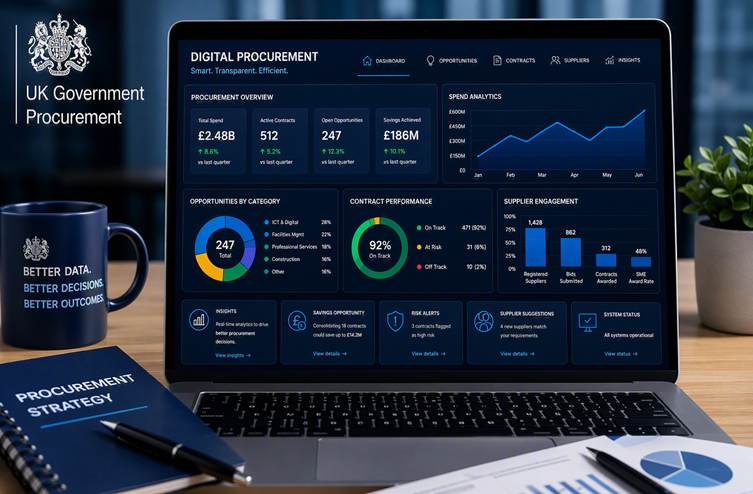
AI can undoubtedly improve efficiency by:
- Analysing tender documentation.
- Generating draft responses.
- Identifying compliance gaps.
- Supporting bid reviews.
However, procurement experts continue to warn against overreliance on AI-generated content. Generic responses, unverified claims, and a lack of organisational authenticity remain common weaknesses in AI-assisted submissions.
The most successful suppliers are using AI as an enhancement tool rather than a replacement for subject matter expertise. Technology can help write the draft. It cannot replace operational experience, delivery insight, or genuine understanding of a client’s requirements
What This Means for SMEs
Encouragingly, many procurement commentators believe the reformed procurement landscape presents significant opportunities for SMEs. Increased transparency, greater emphasis on social value, and measures designed to reduce barriers to entry are helping create a more level playing field.
Yet challenges remain.
Many smaller suppliers continue to struggle with:
- Bid-writing resource constraints.
- Carbon reduction requirements.
- Social value reporting expectations.
- Framework accessibility.
- Compliance documentation.
The organisations succeeding in 2026 are those investing early in bid readiness, building reusable evidence libraries, developing strong case studies, and embedding measurable outcomes throughout their operations.
Final Thoughts – Understanding Buyer Priorities to Tender Successfully
The message from buyers, procurement professionals, and industry leaders is becoming increasingly consistent. The era of compliance-only bidding is ending.
Successful tenders are no longer built around what a supplier says they will do. They are built around what they can evidence they have done, how they will deliver, and how they will measure success.
For suppliers operating within the UK public sector marketplace, the opportunity remains enormous. However, future success will belong to organisations that can combine compliance with credibility, strategy with evidence, and promises with measurable outcomes.
In 2026, winning bids are not necessarily the cheapest bids, nor the longest. They are the bids that give buyers confidence that delivery will happen exactly as promised. For help in strategising for your public sector tender efforts, book a session at BidHelp.co.uk and we’ll get you moving!!